What is restaurant automation and how does it work?
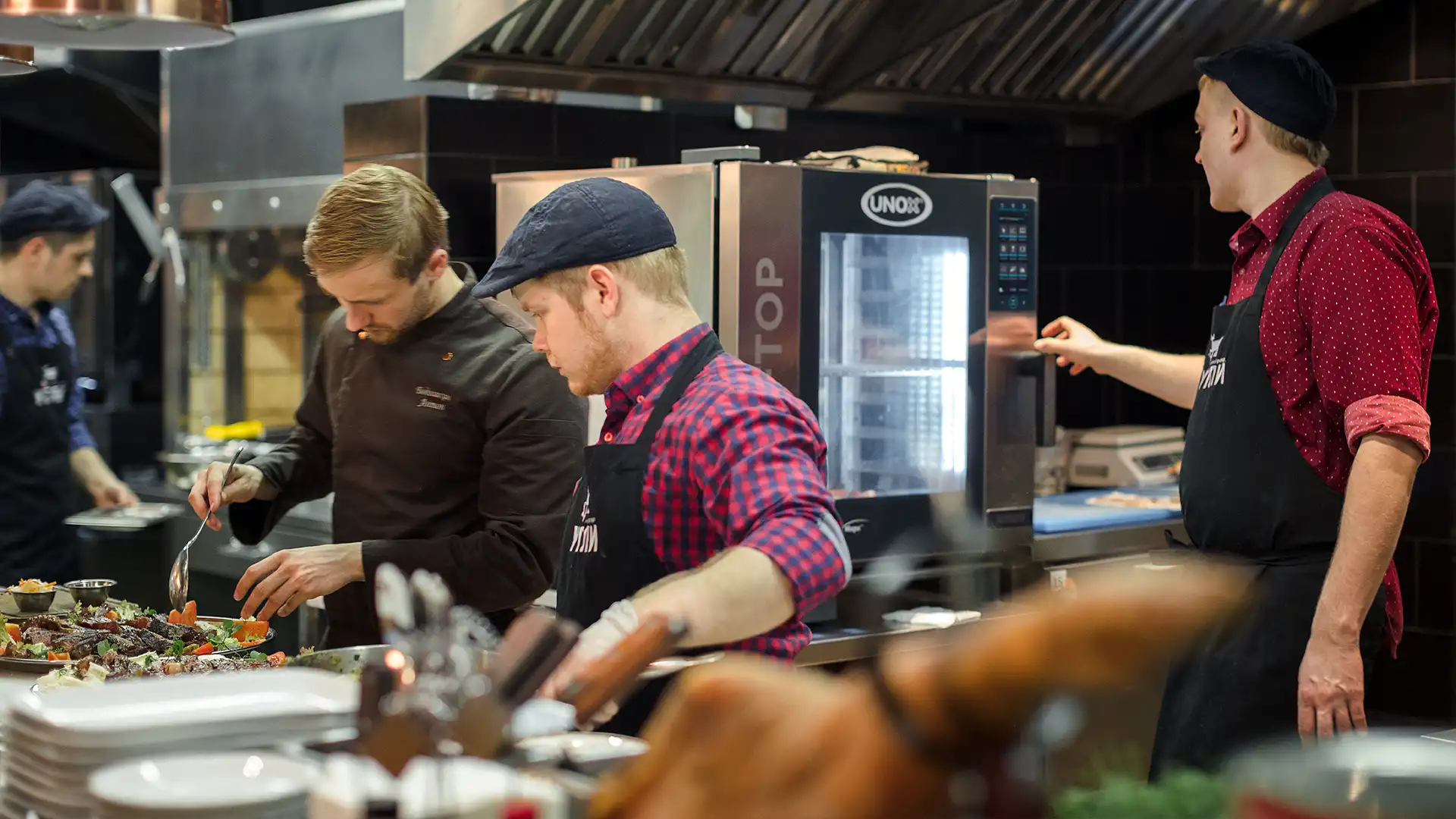
Restaurant automation is the use of technology to perform, manage, or simplify tasks that would otherwise require manual intervention. Its main purpose is to improve operational efficiency, reduce repetitive work, and make restaurant processes more consistent and easier to manage.
Today, automation for restaurants extends across virtually every area of the business, including:
- Order management: digital ordering systems and self-service kiosks simplify order processing and customer interactions.
- Payments: automated payment solutions streamline transactions and reduce manual operations.
- Inventory management: digital systems help track stock levels, monitor ingredients, and support purchasing decisions.
- Business operations: AI-powered forecasting and management tools help restaurants plan demand, schedules, and resources.
- Food preparation and cooking: automated restaurant equipment can perform or control physical processes, reducing the need for continuous manual intervention.
From software to automated restaurant equipment, these technologies are changing how restaurants operate.
Among these applications, food preparation and cooking deserve particular attention. Unlike administrative tasks, these activities directly affect the quality of the food served, the speed of service, ingredient usage, and the workload of restaurant staff.
Every dish involves different preparation and cooking stages, often requiring constant attention, coordination, and manual intervention.
This makes food preparation and cooking particularly interesting areas in which to explore the potential of restaurant automation.
Why is restaurant automation so important for food preparation and cooking?
Restaurant automation can make a significant difference in food preparation and cooking because these processes directly influence productivity, operating costs, food quality, and customer satisfaction.
Preparing a dish involves much more than following a recipe. Ingredients must be processed, cooking parameters need to be controlled, and multiple preparations often have to be managed simultaneously, particularly during peak service hours.
Automating some of these operations allows restaurants to standardize complex processes, reduce repetitive work, and make better use of available resources.
For restaurant owners, the main benefits include:
- Higher productivity: automated preparation and cooking processes allow staff to manage multiple activities simultaneously, increasing production capacity without proportionally increasing manual workloads.
- Consistent food quality: standardized recipes and automated cooking parameters help reproduce the same results across different operators, shifts, and restaurant locations.
- Better cost control: optimizing preparation processes, reducing manual operations, and minimizing ingredient waste can help restaurants manage food and operating costs more effectively.
- Greater production flexibility: automated equipment can help restaurants manage different recipes, adapt to changing demand, and organize production more efficiently during peak service periods.
These benefits are particularly relevant because food preparation and cooking remain closely connected to one of the restaurant industry's biggest challenges: the availability of qualified staff.
How can restaurant automation help businesses overcome labor shortages?
Restaurant automation can help businesses address labor shortages by reducing repetitive work, simplifying training, and allowing existing teams to manage production more efficiently.
According to the National Restaurant Association's 2025 State of the Restaurant Industry report, 77% of restaurant operators identified recruiting and retaining employees as a leading challenge.
For restaurant owners, automated food preparation and cooking equipment can help address this challenge in several ways:
- Make better use of available staff: automated equipment can manage time-consuming preparation and cooking operations, allowing employees to focus on other activities without necessarily increasing team size.
- Simplify training: intuitive interfaces, preset programs, and guided procedures make routine tasks easier to manage, even for less experienced employees.
- Maintain consistency despite staff turnover: standardized recipes and automated processes help reproduce the same results across different operators, shifts, and restaurant locations.
- Reduce pressure on kitchen teams: limiting repetitive tasks and the need for continuous supervision allows chefs to dedicate more time to menu development, quality control, and customer experience.
These benefits can be valuable for restaurants of different sizes, from independent businesses facing difficulties recruiting qualified professionals to growing chains that need to maintain consistent standards across multiple locations.
However, automating repetitive tasks is only part of the solution. The real challenge is choosing technologies that improve everyday operations without introducing additional complexity.
What are the limitations of automated restaurant equipment for food preparation?
Some highly specialized automated restaurant equipment can present limitations related to versatility, programming complexity, technical support, and investment costs.
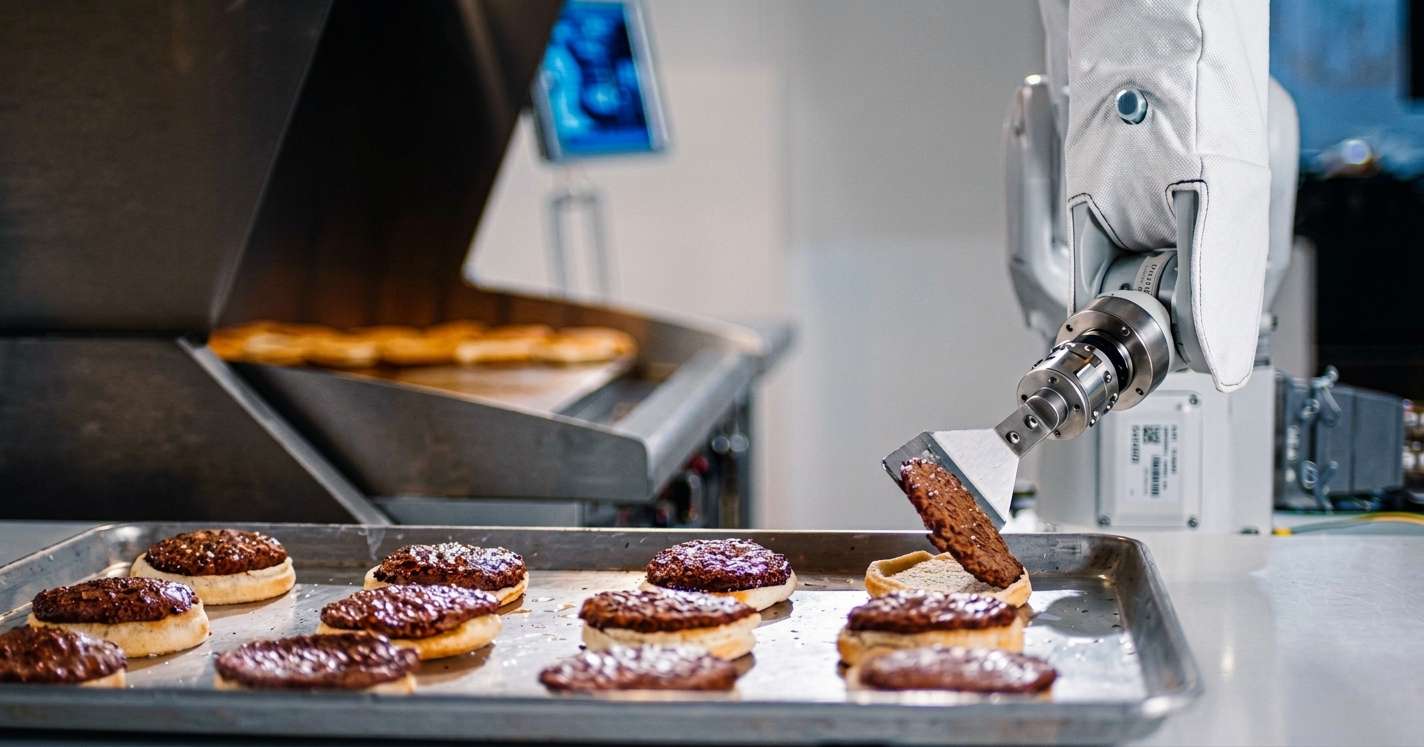
When we think about automated food preparation, robotic systems designed to assemble burgers, prepare pizzas, or perform specific cooking operations often come to mind.
These technologies can be highly effective at automating individual tasks, especially when production processes are standardized. However, their specialization can also introduce practical challenges:
- Task-specific equipment: a robot designed to perform one operation may require additional appliances to complete other preparation stages, increasing the equipment and space needed in the kitchen.
- Limited versatility: restaurants often need to manage different ingredients, recipes, and cooking techniques. Equipment designed for a narrow range of operations may be difficult to adapt when production requirements change.
- Specialized technical support: some automated systems require qualified technicians for maintenance or troubleshooting. When a critical preparation depends on a single machine, unexpected downtime can disrupt kitchen operations.
- Complex programming: adapting automated processes to new recipes or production requirements may involve technical adjustments, specialized knowledge, or additional training.
- High investment costs: advanced robotic automation can involve significant expenses beyond its purchase or rental price, including installation, integration, maintenance, and staff training.
Is restaurant automation worth the investment? The answer depends on the type of business, its production requirements, and the operational benefits the technology can realistically deliver. Beyond the initial price, restaurant owners should consider how much manual work the equipment can reduce, how frequently it can be used, and how easily it can adapt to different tasks.
Whether a business operates a high-volume restaurant chain or an independent restaurant with a varied menu, the objective remains the same: automate as much repetitive work as possible while maintaining flexibility, quality, and operational control.
What makes restaurant automation truly effective in commercial kitchens?
Effective restaurant automation should combine two fundamental characteristics: versatility and ease of use.
Rather than relying on different machines for every preparation stage, multifunctional equipment can automate several operations within a single system, helping restaurants make better use of their investment, available space, and staff resources.
But versatility alone isn't enough. Equipment capable of performing multiple functions may still create operational challenges if it requires complex programming or specialized technical knowledge.
The real value lies in technologies that can automate complex processes while remaining intuitive and adaptable to different production needs.
And this isn't just a vision for the future. Professional kitchens have already experienced a major transformation based on these same principles.
That transformation began with one of the most important innovations in professional cooking: the combi oven.
The combi oven revolution: a milestone in cooking automation
Long before robotic kitchens and artificial intelligence became central to discussions about restaurant automation, another innovation had already demonstrated the value of combining multiple functions into a single appliance: the combi oven.
Traditionally, commercial kitchens relied on different appliances to perform different cooking methods. Roasting, steaming, and baking often required separate equipment, each demanding space, attention, and manual control.
The combi oven transformed professional cooking by combining convection heat and steam in a single appliance, allowing different cooking methods to be performed using one versatile technology.
Although the first combi ovens appeared decades earlier, technological improvements and growing adoption helped make them increasingly central to professional kitchens during the late 1990s and 2000s.
Beyond multifunctionality: automating the cooking process
The combi oven made it possible to delegate an increasingly significant part of the cooking process to technology. As programmable controls and automatic cooking systems evolved, operators could select a cooking program and let the oven manage temperature, humidity, and cooking time without continuously adjusting the parameters themselves.
The result was a fundamental change in kitchen organization: while the commercial oven managed the cooking process, staff could dedicate their attention to other activities.
This helped professional kitchens increase production capacity, improve consistency, and make more efficient use of their teams.
In other words, the combi oven demonstrated that the value of restaurant automation isn't just about making a process faster. It's about allowing one technology to manage multiple cooking methods while freeing people to focus on other tasks.
Today, this same principle continues to drive the evolution of professional cooking.
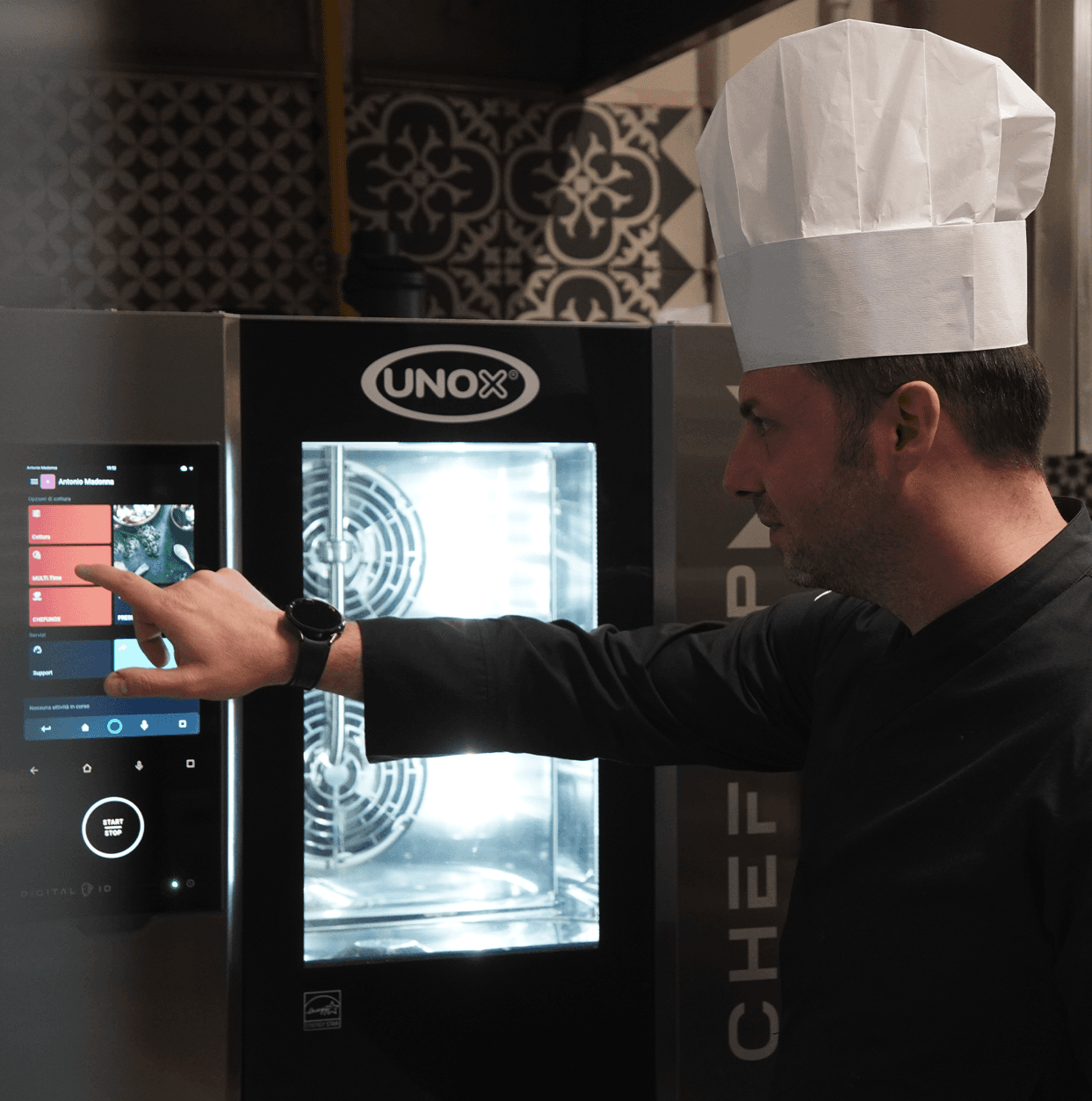
CHEFTOP-X™ combi oven: taking cooking automation further with AI
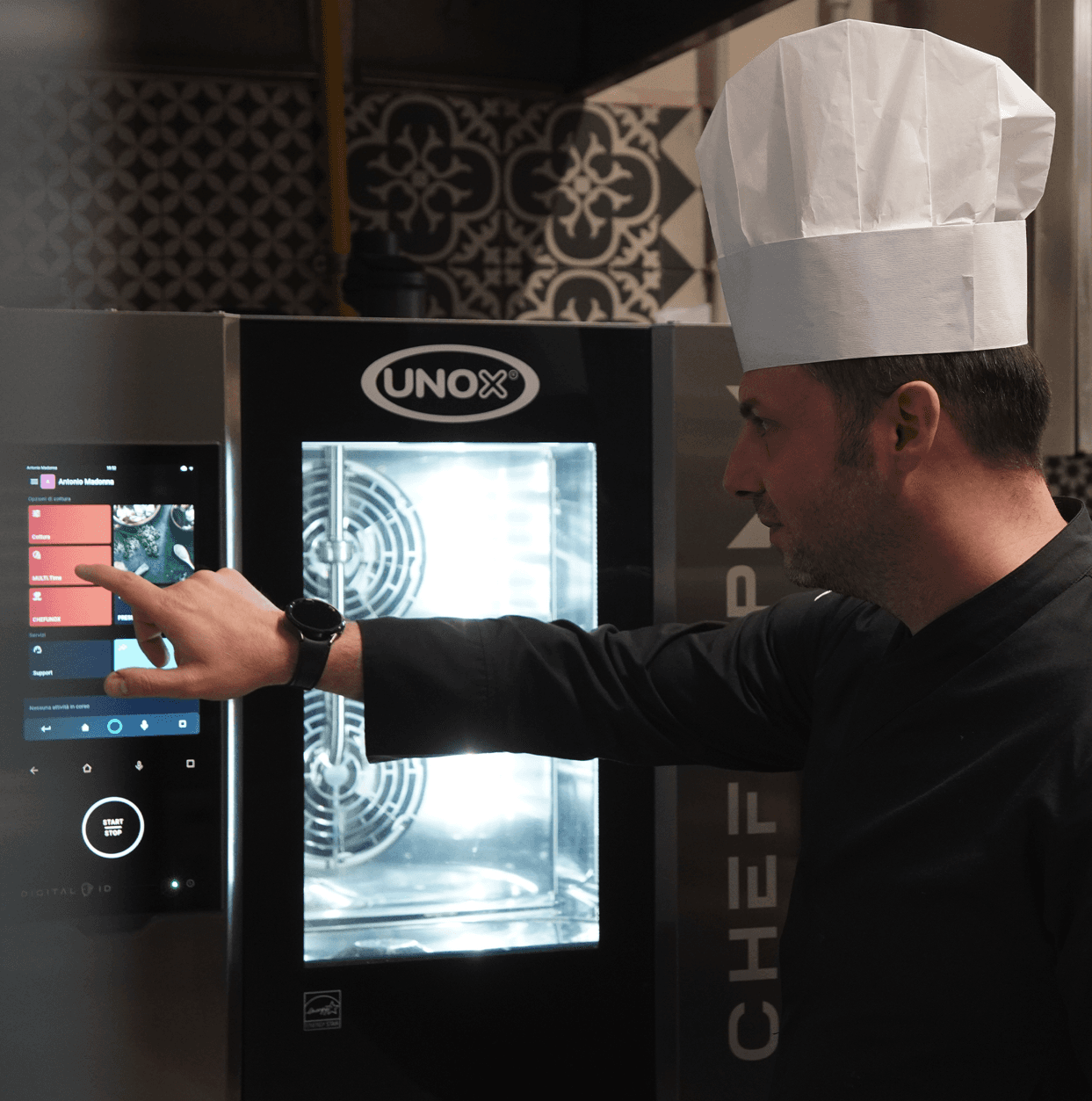
The CHEFTOP-X™ commercial combi oven represents Unox's approach to the evolution of intelligent cooking equipment, combining advanced cooking technologies with an intuitive user experience.
After years of innovation focused on achieving high cooking quality, Unox took the next step: going beyond cooking performance to simplify the entire cooking experience. The focus shifted toward automating repetitive, low-value tasks, reducing manual intervention and the risk of human error, while allowing kitchen professionals to dedicate more time to higher-value activities.
To make cooking even simpler, Unox has developed intelligent technologies that automate key steps of the process, from selecting the right cooking program to adjusting parameters during cooking.
With OPTIC.Cooking, artificial intelligence and optical recognition allow CHEFTOP-X™ to identify supported foods and automatically start the appropriate cooking program, reducing the need for manual selection. Once cooking begins, ADAPTIVE.Cooking automatically adjusts cooking parameters according to the food load, helping achieve consistent results even when quantities change.
These functions work alongside the Digital.ID™ operating system, which allows operators to manage, customize, save, and reproduce cooking programs through an intuitive interface, while also enabling remote oven monitoring and control directly from a smartphone.
This is how AI and intelligent automation can take professional cooking a step further: not only by helping maintain consistent results, but also by making sophisticated processes easier to manage, with fewer manual adjustments and less need for continuous supervision.
For restaurant owners, this means more efficient kitchen operations, greater flexibility in managing different preparations, and more time for staff to focus on higher-value activities.
Discover how CHEFTOP-X™ brings intelligent cooking automation to your kitchen.
Beyond cooking: the next step in commercial kitchen automation
Cooking automation has transformed commercial kitchens, but preparing a dish involves much more than applying heat. Chopping, mixing, blending, and cooling often require different appliances, repeated ingredient transfers, and continuous operator involvement.
What if the same principles that revolutionized cooking could be extended to these processes?
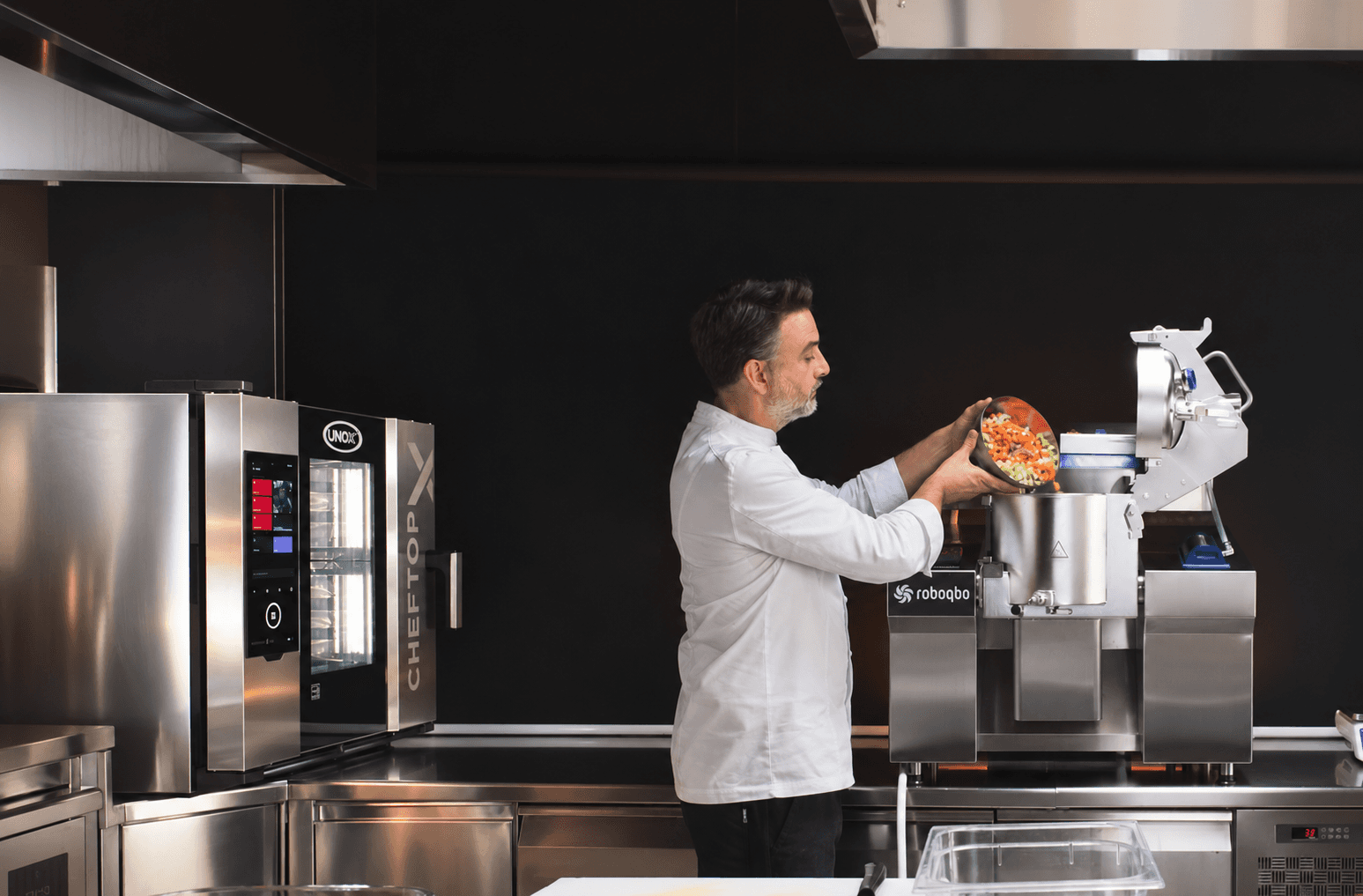
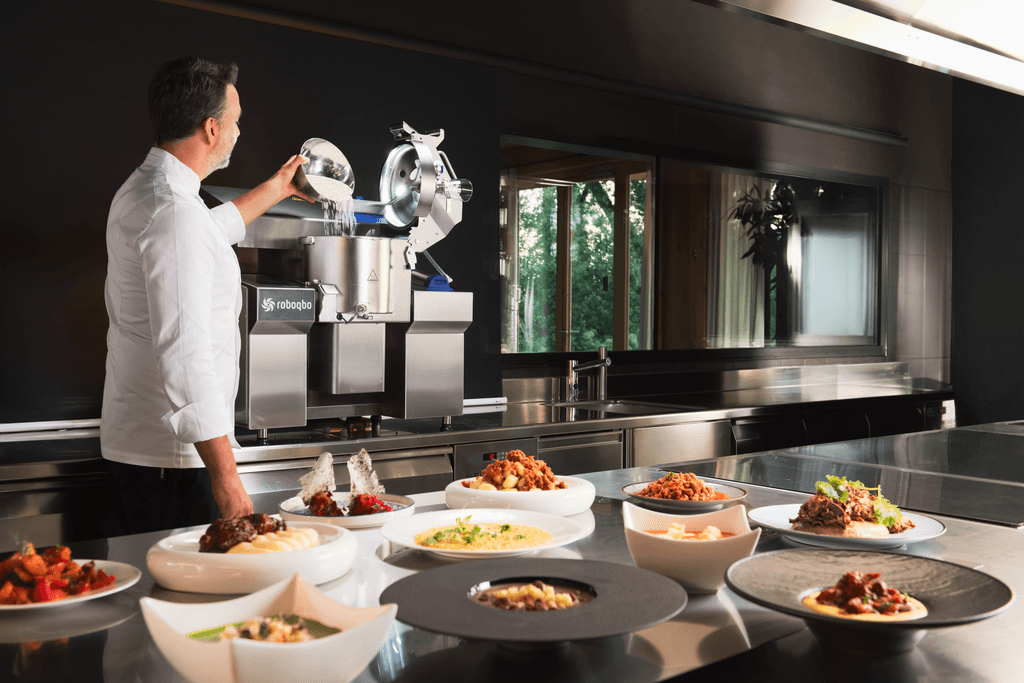
This is the idea behind Qbo, the multifunctional commercial kitchen robot, which combines chopping, mixing, blending, cooking, and cooling in a single system.
What makes Qbo particularly innovative is its ability to combine pressure cooking and integrated cooling within the same machine. Pressure cooking helps significantly accelerate certain preparations, while integrated cooling allows operators to manage both heating and cooling stages without transferring ingredients between different appliances.
Qbo also features vacuum processing technology, which reduces oxygen exposure during preparation, helping preserve ingredients' natural colors, flavors, and aromas.
Rather than managing each operation separately, operators can add the ingredients, select a program, and let Qbo execute the different stages of the preparation, intervening when required.
Take a traditional meat sauce, for example: Qbo can handle everything from chopping vegetables and sautéing ingredients to mixing and simmering the sauce, all within the same machine. What would normally require several manual steps becomes a largely automated process, freeing up valuable time for kitchen staff.
It's the same principle that made the combi oven so transformative: automating multiple processes within one versatile technology, now extending beyond cooking.
Qbo.PRO: more functions, less complexity
With Roboqbo joining the Unox Group, this multifunctional approach becomes part of a broader vision of professional kitchen automation.
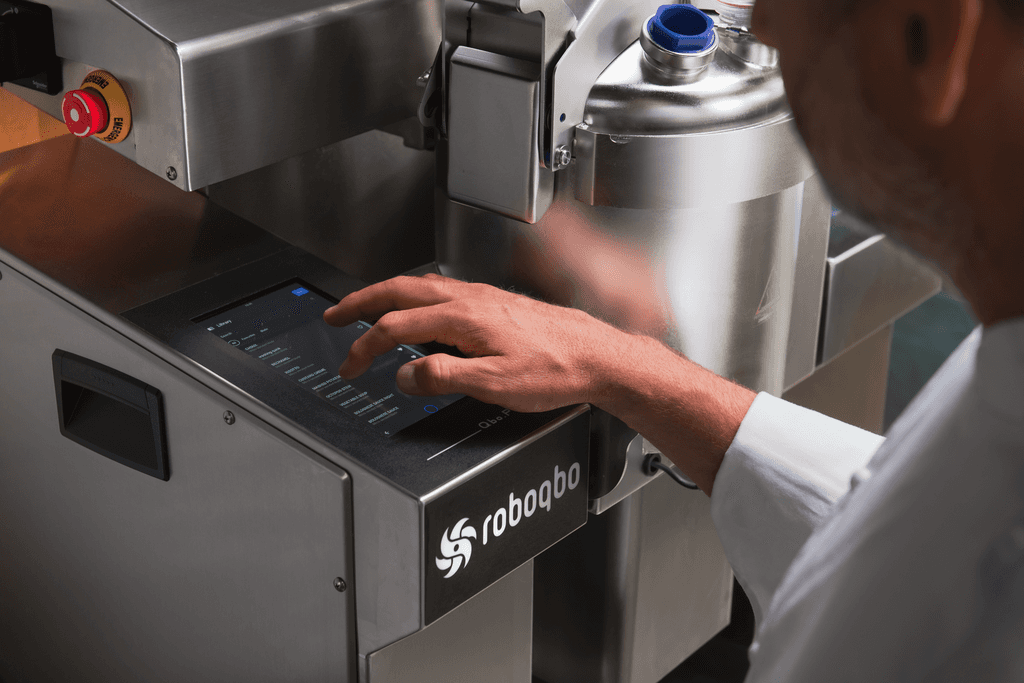
Qbo.PRO combines Qbo's processing capabilities with the Digital.ID™ interface, offering an intuitive operating experience consistent with Unox's intelligent combi ovens, including CHEFTOP-X™.
The objective is simple: make advanced restaurant automation accessible without requiring operators to become technical programmers.
Chefs can develop a recipe, adjust its parameters, and save the process once the desired result has been achieved. Qbo.PRO can then reproduce the program consistently, using guided procedures even when additional operator actions are required.
But what difference can this make in everyday kitchen operations?
First, faster preparation times. With Qbo, a traditional beef stew that normally takes 3 hours can be ready in just 40 minutes, while Bolognese sauce can go from 2 hours and 30 minutes to just 35 minutes.
But the real advantage goes beyond speed: it's the reduction in hands-on work. Take béchamel sauce, for example: the chef's active working time can drop from 40 minutes to just 1 minute. For Bolognese sauce, it can decrease from 60 minutes to only 5 minutes.
For restaurant owners, this means not only faster production, but also more time for kitchen staff to focus on other activities, while Qbo handles repetitive preparation tasks.
These examples illustrate two distinct advantages of kitchen automation: reducing the time needed to complete certain preparations and, just as importantly, freeing operators from continuous manual involvement.
For restaurant owners, these advantages translate into three key benefits:
- Do more with fewer staff resources: by automating time-consuming preparations, Qbo helps kitchens maintain productivity and consistent quality, even when qualified staff are difficult to find.
- Reduce stress in the kitchen: with minimal manual intervention required during automated processes, chefs can dedicate more attention to menu development, quality control, and customer experience.
- Keep ingredient costs under control: by processing ingredients within a single system, Qbo helps minimize product losses during transfers between appliances and makes it easier to reuse suitable food scraps, reducing waste and making better use of raw materials.
Qbo.PRO represents a missing piece in the Unox ecosystem: extending multifunctional automation from cooking to the preparation processes that come before it.
Want to learn more about Qbo.PRO? Visit the official Roboqbo website to explore its features, technologies, and applications for commercial kitchens!
The future of restaurant automation: Unox's Vision
At Unox, we envision the future of restaurant automation as an ecosystem of intelligent, multifunctional, and easy-to-use technologies capable of managing an increasingly large part of the food production process.
Rather than relying on separate machines for every task, our vision is to combine complementary technologies that make professional kitchens more efficient, flexible, and easier to manage.
We call this vision “Cooking Beyond Cooking.”
The idea is simple: chefs should be able to focus on the art of cooking without having to manage every step of the cooking process themselves. While intelligent technologies take care of repetitive, operational tasks, chefs can dedicate more time to creativity, menu development, quality control, and customer relationships.
As Unox CEO Nicola Michelon explains:
“The value of automation is not in replacing people, but in allowing them to focus on activities that require experience, creativity and sensitivity. A professional kitchen cannot operate like an industrial production line. It needs to adapt, change, create new dishes and follow the chef's vision and customer needs. That's why automation must be simple: the chef can experiment, adjust the parameters and define the desired result. Once the process has been saved, the machine can reproduce it with the same precision.”
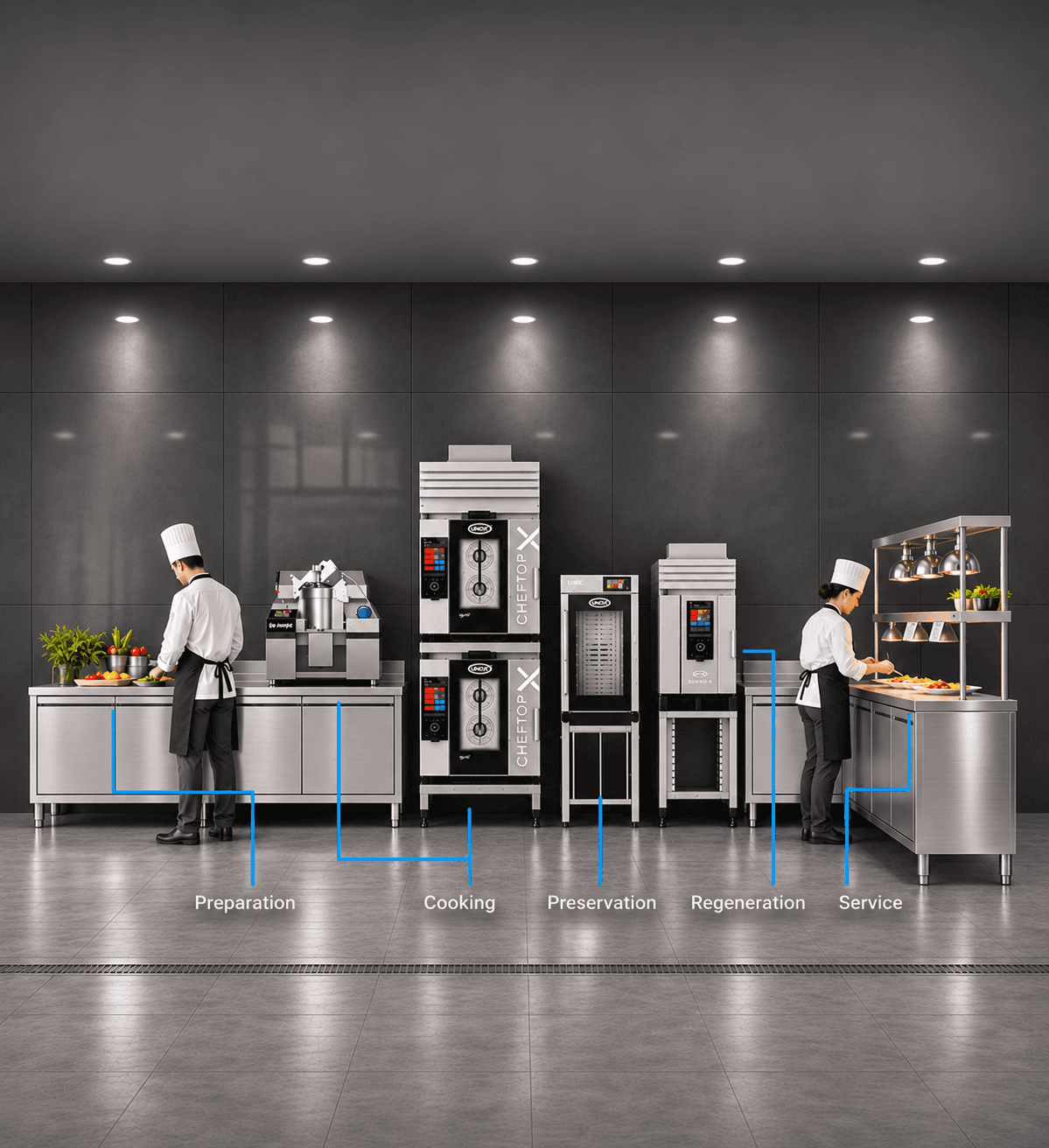
Imagine a professional kitchen where the chef selects the ingredients, develops the recipe, and defines the desired result. From there, technology takes care of much of the operational process.
The multifunctional commercial kitchen robot Qbo.PRO manages different preparation stages, from chopping and mixing to cooking and cooling, while the intelligent combi oven CHEFTOP-X™ automatically controls cooking parameters to help deliver consistent results.
But efficient production is only part of the challenge. Restaurants also need to coordinate food preparation with service, particularly during peak hours.
This is where EVEREO® complements the Unox ecosystem. Developed to move beyond conventional short-term hot holding, EVEREO® uses controlled preservation technology to keep suitable cooked food at service temperature for up to 72 hours with its MULTI.Day method, under the required conditions and using the appropriate containers and procedures.
This allows restaurants to prepare certain dishes in advance and organize production more flexibly around customer demand.
When regeneration is needed, technologies such as CHEFTOP-X™ and SPEED-X™, the world's first self-washing combi speed oven, can support the process.
Finally, people return to the center of operations, checking the results, completing the presentation, and delivering the finished dish to the customer.
The result is not a fully autonomous kitchen without people, but one where technology manages more of the repetitive work between initial preparation and final service.
For restaurant owners, this means greater flexibility in production planning, more efficient use of equipment and resources, and less operational pressure during the busiest hours.
Want to discover which automation technologies best suit your business? Explore our dedicated guide to commercial kitchen automation and find the right solutions for your needs.
Ready to experience the Kitchen of the Future?
More than a product demonstration: experience Unox technology in your own kitchen!
With our free Individual Cooking Experience, we bring our expertise and technology directly to your restaurant, giving you the opportunity to test our ovens with your own ingredients, recipes, and everyday cooking challenges.
Discover firsthand how intelligent automation can simplify your operations, improve productivity, and make a real difference to your business.