Changing More Than the Menu
One of Frank's earliest challenges as a nutrition director was preparing her district for new nutrition regulations that were scheduled to take effect within two years.
The district had significant work to do.
Salt and pepper shakers were on the serving line. Butter was readily available. French fries and other starchy vegetables appeared far more frequently than the upcoming standards would allow.
Frank began making changes before the regulations required them.
The reaction was not exactly enthusiastic.
“I was getting a lot of criticism from staff and students,” she recalls.
At one point, the pushback even brought her before the school board.
At the same time, Frank was making another significant change. She began purchasing food locally and, in 2006, her district became the first in southern Minnesota to start a Farm to School program.
During a Meet Your Farmer event at one of the district's elementary schools, students were served a meal made with locally sourced ingredients. Frank invited her superintendent, who had been skeptical of some of the changes, to attend.
The superintendent told Frank he was surprised to see the students eating fresh corn on the cob without butter or added salt.
Frank's explanation was simple: “If you bring in a quality product, locally sourced, you don't need to mask it with butter and salt.”
It became a turning point.
By the time the new nutrition standards took effect, the state had conducted a nutrient analysis of Frank's meals and found the district was already below the new sodium standards.
But something else happened too. Students were participating.
When Frank arrived, the district's meal participation rate was around 75%. At its peak, she says participation reached between 90% and 97%.
For Frank, it demonstrated what can happen when schools invest not only in nutrition, but also in food quality, education and the overall meal program.
Years later, one of the students who had resisted Frank's early changes sent her an email. The student was studying to become a dietitian and had learned about Farm to School programs, including the work done in her own district.
She finally understood why Frank had pushed so hard for change.
Finding Efficiency in the K-12 School Kitchen
Frank's culinary background has also shaped the way she approaches school kitchen efficiency.
“One of the advantages I have as being a trained chef is I can be a lazy cook,” she jokes.
What she means is that she is constantly looking for ways to remove unnecessary work.
Today, efficiency is a significant part of the training she does with school nutrition programs. For K-12 kitchens managing high meal volumes, tight budgets and limited staff, the right commercial kitchen equipment can be one of the tools that makes that work easier.
That does not necessarily mean adding more equipment.
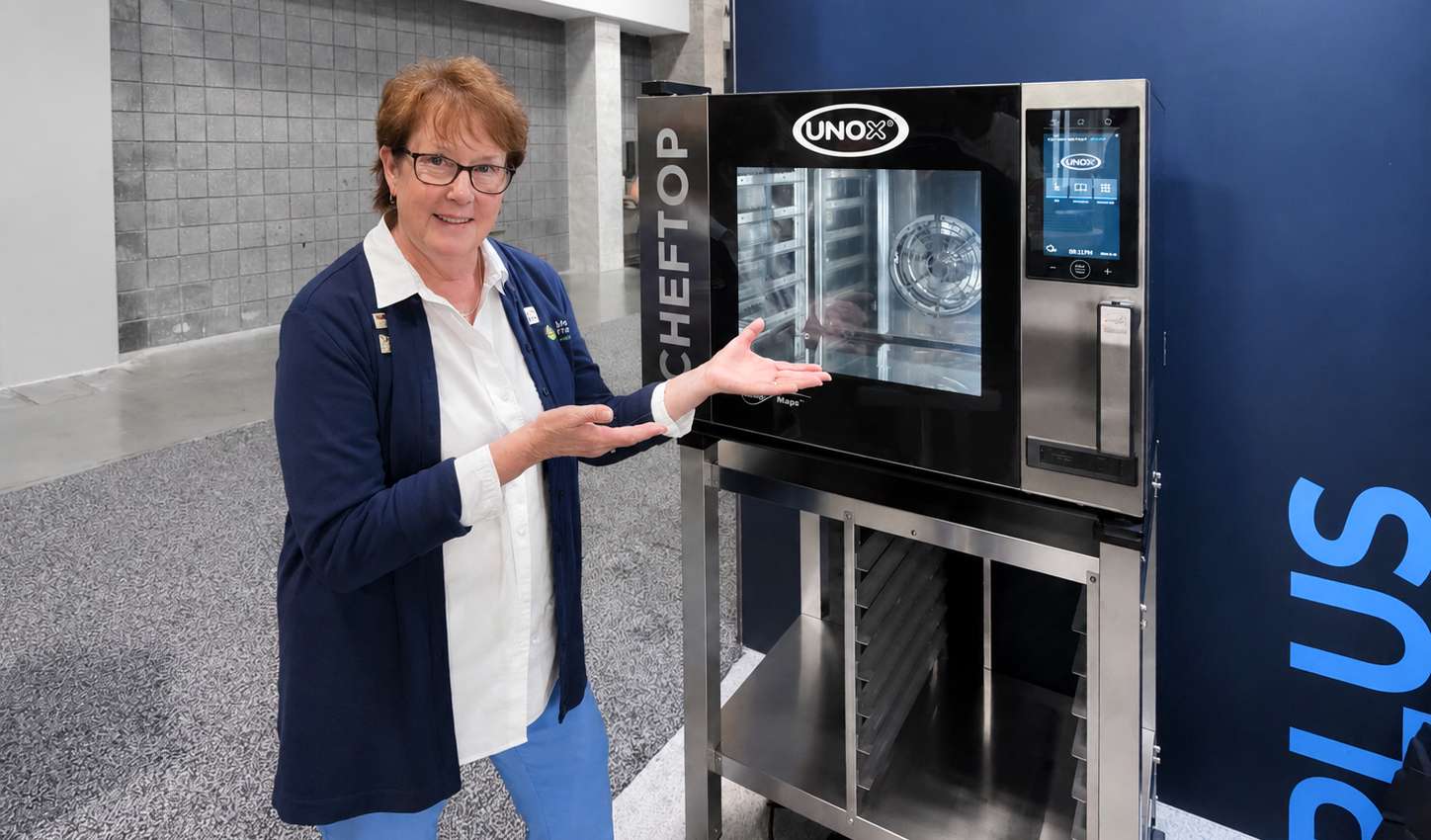
In Frank's experience, versatility can be far more valuable. A commercial combi oven, for example, can consolidate multiple cooking processes into a single piece of equipment, an important consideration for school cafeterias balancing limited kitchen space with increasingly varied menus.
“That's the beauty of the UNOX oven,” she says. “It will do everything. You don't need a steamer, you don't need a smoker, you don't need an air fryer. It's all right there.”
For school kitchens, that flexibility can be particularly important because the people operating the equipment may change frequently. Staff experience can vary, and some operations rely heavily on seasonal or part-time employees.
Frank has seen that firsthand outside the school environment as well. When a Bible camp near her cabin built a new kitchen, she helped purchase equipment for the operation, including UNOX commercial ovens. Every summer brings a different group of seasonal employees, yet Frank says the operation has had no issues using the equipment.
“It is such an easy piece of equipment to use,” she says.
When asked what initially stood out to her about UNOX for staffing and consistency, her answer was equally straightforward.
“Everything's programmed in. You just hit a button.”
Making School Kitchen Modernization Possible
Of course, recognizing that a school cafeteria could benefit from new equipment and finding the money to purchase it are two different things.
Frank has experience there, too.
In Minnesota, Farm to School funding can help districts purchase local foods and invest in equipment. Frank says the state's equipment grant can operate as a 50-50 match, with the district funding half of the investment and the state covering the other half.
She has written numerous grants over the years and has included UNOX commercial foodservice equipment in those applications.
For districts working with limited budgets, opportunities like these can create another path toward school kitchen modernization and equipment that supports the way today's school nutrition programs operate.
Investments in versatile equipment can also help districts rethink how they use available kitchen space and resources. Rather than adding separate equipment for every cooking process, multifunctional technology can give school foodservice teams greater flexibility within an existing footprint.
Choosing Commercial Ovens for School Cafeterias
Frank's first experience with UNOX came through an equipment demonstration. She believes other school nutrition directors should approach new commercial kitchen equipment the same way.
“The first time that I saw a demo, I went, ‘This is going to go someplace.’”
Her advice to directors who are uncertain about introducing new equipment into their own school kitchens is simple:
Have a demonstration. See what it can do. Then decide.
“Don't make any decisions until you see a demo.”
After more than 30 years in school nutrition, Frank has watched expectations around school meals change dramatically. She has helped introduce locally sourced foods, navigated changing nutrition standards, increased student participation and trained others to find greater efficiency in their kitchens.
Through all of it, the principle behind her approach has remained remarkably consistent: don't be afraid to change the way things have always been done when there is a better way forward.
For today's K-12 school nutrition programs, that willingness to look ahead, from the food being served to the technology supporting the kitchen, may be just as important as ever.
See a UNOX Commercial Combi Oven in Action
Considering new commercial cooking equipment for your school kitchen? An Individual Cooking Experience gives your team an opportunity to see UNOX technology in action and explore how it could work with your menu, staff and operation.
Carrie Frank
Carrie Frank brings more than 40 years of culinary leadership and 30 years of experience as a School Nutrition Director to her work supporting K-12 nutrition programs.
Originally from St. Paul, Minnesota, Carrie studied Food Service Management and Culinary Arts before beginning her career in restaurants. Her growing interest in nutrition eventually led her into healthcare, where she continued her nutrition studies and earned her Certified Dietary Manager credential.
Throughout her career, Carrie has combined her experience as a chef, School Food and Nutrition Director, Farm to School Champion, trainer, and program leader to help school districts strengthen operations, improve compliance, develop staff, and build financially sustainable nutrition programs.
Today, through Carrie Frank Consulting, she partners with school districts, charter schools, and educational organizations to provide specialized consulting, training, and technical assistance. Her practical, hands-on approach focuses not only on operational excellence, but also on creating better dining experiences that support student health and academic success.
Carrie’s connection to school nutrition is also deeply personal. As a child receiving free school meals, she remembers a cafeteria cashier who treated her with kindness and dignity at a moment when she felt embarrassed. That experience stayed with her and continues to influence her belief that school nutrition is about much more than serving food—it’s also about the impact the people behind the meal can have on a student’s day.