How can you reduce the energy costs of a commercial kitchen?
To reduce the energy costs of a commercial kitchen, it is necessary to focus on three aspects: the number of appliances used, the efficiency of each technology and energy consumption management during service. The goal is not to limit the menu, but to achieve the same performance while using less energy and reducing heat loss and idle time.
Reduce the number of appliances in use
Commercial ovens, griddles, fryers, boilers and other equipment often operate for several hours a day, directly affecting the business's operating costs. Part of this energy consumption also results from several appliances operating simultaneously, each with its own preheating times, standby periods and heat loss.
A multifunction commercial combi oven can combine several cooking techniques in a single system, including steaming, grilling, roasting, regeneration and air frying. Depending on the menu and production volumes, this makes it possible to reduce the need for multiple separate appliances and limit the energy consumption generated by several heat sources operating at the same time.
The advantage is not limited to the space occupied. Using fewer appliances can also mean less energy loss, less idle time and simpler cleaning and maintenance operations.
Adapt energy consumption to actual cooking requirements
Energy efficiency depends not only on the number of appliances in the kitchen, but also on how each machine uses energy.
A commercial oven does not require the same power throughout every stage of operation: it consumes more energy to reach the set temperature and less to keep it stable during cooking.
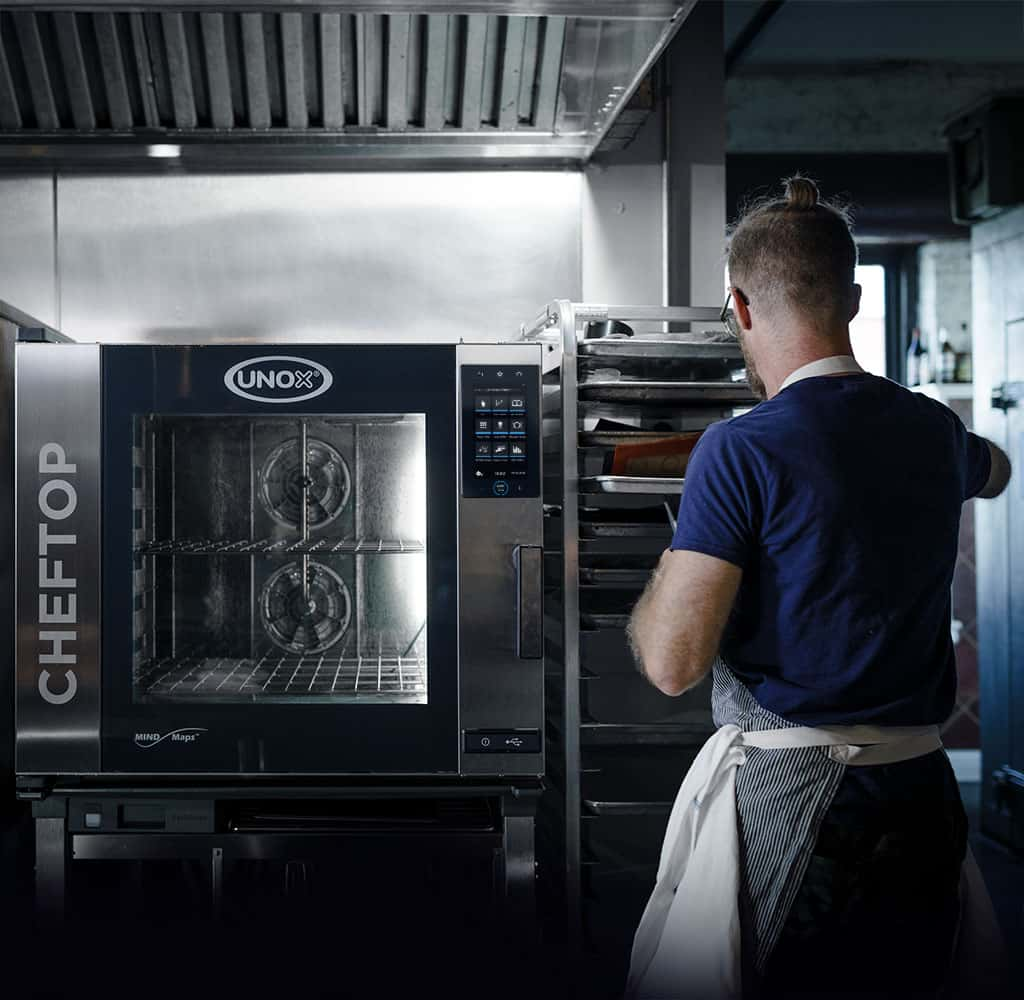
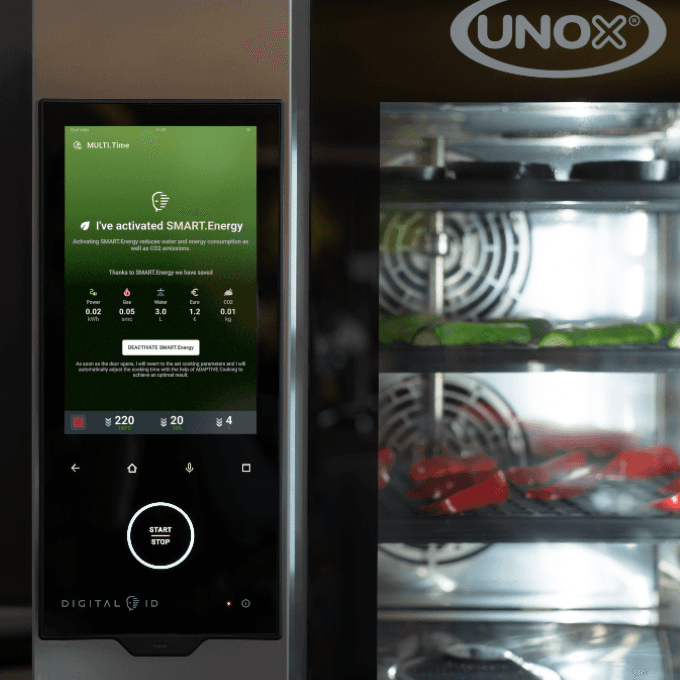
The latest-generation Unox combi ovens, such as CHEFTOP-X™, integrate intelligent technologies such as SMART.Energy, designed to monitor operating conditions and automatically activate energy-saving opportunities. When the oven is running empty, for example, the system can reduce the cooking chamber temperature and fan speed, limiting unnecessary energy consumption.
These technologies are complemented by construction solutions and insulating materials designed to retain heat inside the cooking chamber. This allows the oven to maintain the required performance while reducing heat loss to the surrounding environment.
Choose equipment with certified performance
To assess the efficiency of commercial equipment, considering only its rated power is not enough. It is also important to check its energy consumption under real operating conditions and whether it has obtained certifications through standardised testing.
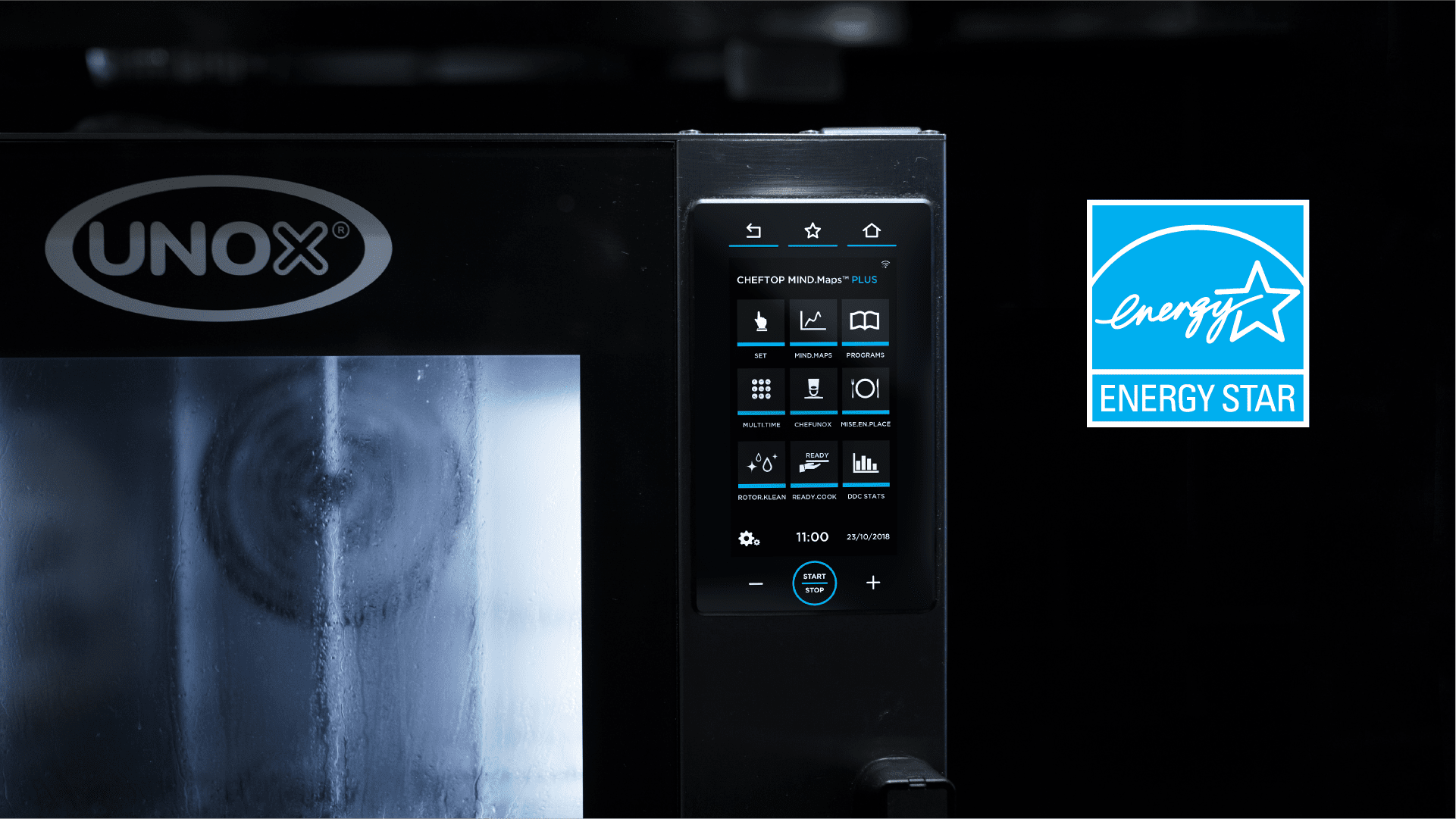
Unox is the manufacturer with the highest number of ENERGY STAR® certified commercial ovens. ENERGY STAR® is the international programme that identifies equipment designed to deliver high levels of energy efficiency.
A concrete example can be found in the tests reported in the Unox ESG Report. In the comparison considered, a 10-tray ENERGY STAR® certified CHEFTOP MIND.Maps™ electric combi oven recorded energy consumption up to 52.2% lower than an electric commercial grill, based on an average volume of 50 kg of food prepared per day over 10 years.
Actual savings may vary depending on the menu, cooking loads, operating hours and kitchen organisation. However, the data demonstrates how choosing multifunctional, energy-efficient technology can significantly affect operating costs in the long term.
Would you like to discover how to reduce energy consumption with ENERGY STAR® certified solutions? We have created a dedicated guide.
How can staff costs be optimised in the kitchen?
The difficulty in finding qualified staff is currently one of the most significant challenges facing the foodservice industry. Kitchens must maintain consistent quality and productivity in a context where recruiting and training new employees is becoming increasingly complex. How can labour costs be reduced without compromising service?
The answer lies in simplifying processes, reducing repetitive tasks and improving work organisation. Unox professional technologies help achieve this goal in several ways:
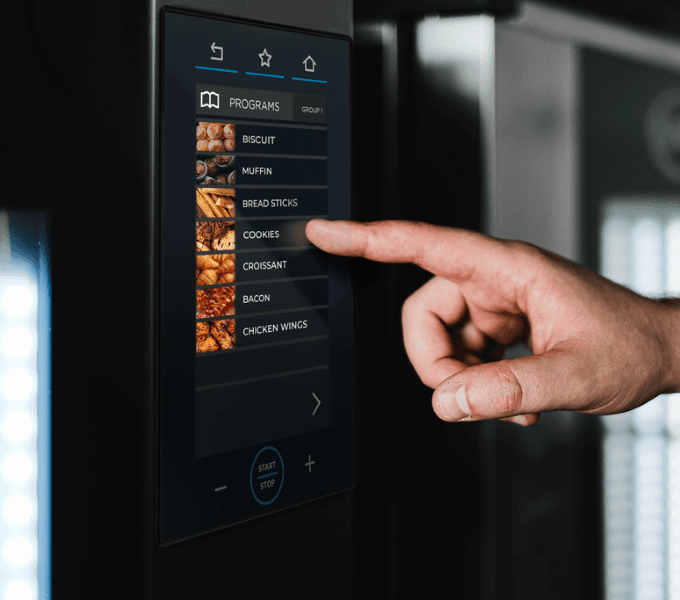
- Automatic cooking programmes: Unox combi ovens can store more than 300 programmes. The most experienced chef only needs to define and save the correct settings once, allowing the entire team to replicate the same result with a single touch.
- ADAPTIVE.Cooking™: once the programme has started, the oven automatically adjusts cooking time, temperature and humidity, leaving staff free to focus on other tasks.
- OPTIC.Cooking: the intelligent optical sensor in CHEFTOP-X™ combi ovens recognises the food placed inside and automatically starts the most suitable programme, further reducing the risk of error.
- Automatic washing: at the end of service, automatic cleaning cycles reduce manual operations and the time required to restore the oven to optimal operating conditions.
- Hot preservation with EVEREO®: this HACCP International-certified technology makes it possible to prepare certain dishes in advance and preserve them at serving temperature for several days. Work can therefore be distributed more effectively throughout the day, easing pressure during peak service periods.
Technology does not replace the chef's expertise: it makes it easier to transfer and replicate. The chef defines the standard, while the system helps the entire team follow it, cooking after cooking.
Simpler, standardised processes make it possible to onboard new employees more quickly and organise teams made up of people with different levels of experience, reducing dependence on a small number of highly specialised professionals. At the same time, a more predictable and organised working environment, with less exposure to errors, helps reduce stress and retain staff for longer.
Automating repetitive operations does not simply mean working faster. It also frees up time for the activities that generate greater value: monitoring quality, perfecting the presentation of dishes, coordinating service and developing new menu options.
Qbo and Unox commercial ovens reduce working times in the kitchen
The coordinated use of the Qbo multifunctional food processing system and Unox commercial ovens makes the entire production workflow more efficient, from ingredient preparation to final cooking. Automating longer and more repetitive processes reduces the amount of active working time required from staff and allows the kitchen team to focus on other tasks at the same time.
Automate multiple processes with a single piece of equipment
Qbo combines in a single system operations that, in a traditional kitchen, may require several pieces of equipment and frequent supervision. It can mix, cut, refine, homogenise, cook, cool and pasteurise according to predefined parameters that can be replicated with precision.
The operator loads the ingredients, selects the dedicated programme and starts the process. Qbo then automatically manages the different stages of the recipe, reducing the need to stir, check the temperature or intervene during processing.
The benefit is not limited to standardising the result. By reducing the active working time required for each preparation, staff can work on other recipes, plate dishes, monitor quality or organise service activities.
How much time can be saved? The example of ragù
A practical example is the preparation of ragù. In the comparison considered, the traditional method requires approximately 2 hours and 30 minutes in total. Of this time, around one hour directly involves the chef or operator in preparing the ingredients, managing the sautéed base, adding the raw materials, stirring and supervising the cooking process.
With Qbo, the preparation is completed in approximately 35 minutes and requires around 5 minutes of active working time to load the ingredients and start the programme. The system autonomously manages the subsequent stages, from cutting and mixing to cooking.
Comparison of ragù preparation times:
- Traditional method: approximately 2 hours and 30 minutes in total, including 60 minutes of active working time.
- Preparation with Qbo: approximately 35 minutes in total, including 5 minutes of active working time.
- Active working time freed up: approximately 55 minutes for each preparation.
The saving therefore mainly concerns the time during which staff must intervene directly in the process. In the example considered, Qbo reduces active working time by 91.7%, allowing the kitchen team to use the 55 minutes freed up for other productive activities.
Once preparation is complete, Unox commercial ovens can manage the subsequent cooking or regeneration stages. Qbo and the ovens therefore work within a coordinated workflow that simplifies processes, reduces the need for supervision and makes recipes and results easier to replicate.
How reducing food waste can lower costs even further
Reducing food waste in a commercial kitchen requires action at three stages: preventing mistakes during preparation and cooking, preserving prepared food correctly, and making use of the edible parts of ingredients that would normally be discarded.
Reducing food waste is not only a more sustainable choice. Every ingredient that is purchased, processed and ultimately discarded represents a cost that the kitchen has already incurred and can no longer recover. Preventing waste therefore helps protect the business's profit margins and keep food costs under control.
According to the UNEP Food Waste Index Report 2024, approximately 1.05 billion tonnes of food were wasted globally in 2022 across the household, foodservice and retail sectors. The foodservice sector generated 28% of this waste.
In commercial kitchens, waste can be caused by several factors, including overproduction, preparation errors, cooking results that do not meet the required standards, oversized portions and the inefficient management of prepared food.
Reducing cooking errors
Standardising processes helps achieve more consistent results and reduce the number of preparations that must be discarded because they are burnt, undercooked or do not meet the required standards.
Unox commercial ovens allow cooking programmes and parameters to be saved and shared, making recipes easier to replicate across different operators and locations.
In CHEFTOP-X™ commercial combi ovens, OPTIC.Cooking technology recognises the food placed inside the oven and automatically starts the associated cooking programme. This reduces manual intervention and the risk of starting a cooking process using incorrect settings.
Technology cannot completely eliminate the possibility of error, but it helps make the process more predictable and consistent, particularly in kitchens managing a large number of recipes, operators or locations.
Preserving prepared food
Part of food waste is caused by the difficulty of accurately predicting demand. Preparing too little can slow down service, while producing excessive quantities can turn unsold food into a financial loss.
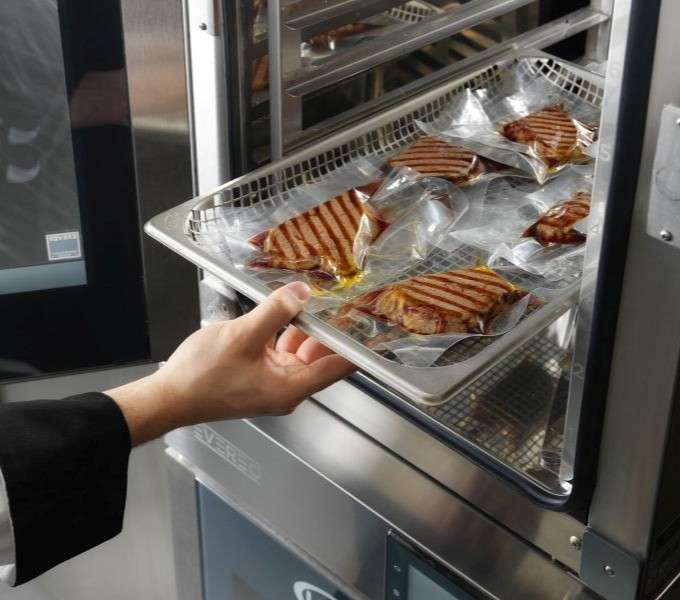
To address this need, Unox developed EVEREO®, the hot preservation system certified by HACCP International that introduces a new way of preserving cooked food. Unlike traditional systems, which require food to be cooled and then regenerated before service, EVEREO® keeps it directly at the temperature at which it will be served.
When used according to the system's specified modes and with the dedicated MULTI.Day trays, food can be preserved at serving temperature for up to 72 hours. This makes it possible to prepare certain recipes in advance, schedule production during less busy periods and keep them available for subsequent services.
When a dish is not sold immediately, it does not necessarily need to be discarded or undergo a cooling and subsequent regeneration cycle. EVEREO® therefore helps preserve the value of the ingredients, energy and labour already invested for longer, reducing the risk of overproduction turning into waste.
Preservation must always be managed in accordance with the procedures specified for each recipe, the packaging requirements and the system's conditions of use.
Making the most of trimmings and edible parts with Qbo
Reducing waste also means making fuller use of the raw materials purchased. Peels, stalks, trimmings and edible processing leftovers can become ingredients for new preparations, provided that the recipe and food safety procedures allow it.
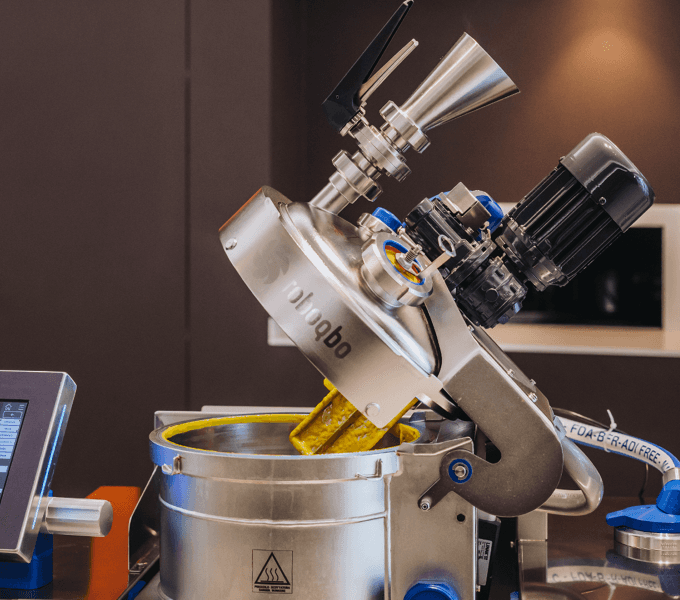
The Qbo multifunctional robot combines several processes in a single piece of equipment, including cutting, mixing, refining, homogenising, cooking, cooling and pasteurising. The precision and repeatability of these processes can facilitate the transformation of unused edible parts into products with consistent characteristics.
Some examples include:
- peels, stalks and vegetable trimmings transformed into stocks, creams or sauces;
- edible meat or fish trimmings used for fillings and stuffings;
- stale bread transformed into coatings, doughs or other preparations;
- very ripe fruit used to make purées, jams or sauces.
In this way, some of the ingredients that might otherwise be discarded can be incorporated into a new recipe, increasing the yield of raw materials and reducing the actual cost of each preparation.
How to choose professional equipment that helps you save money
Are you opening a new restaurant? Or is it time to renovate your commercial kitchen? When choosing new equipment, it is natural to focus on the purchase price. In reality, this is one of the decisions that will have the greatest impact on your business costs in the years ahead. For this reason, the most cost-effective equipment is not necessarily the least expensive, but the equipment that enables you to save money every day.
When investing in a commercial kitchen, the most important question should not simply be, “How much does this equipment cost?”, but rather: “Which solution can generate the greatest long-term value for my business and help me save money over time?”
Choosing the right equipment means assessing several factors that often have a greater impact than the initial purchase price:
- energy consumption: how much the equipment will cost to operate every day for years, not simply how much it costs to purchase;
- versatility: how many different processes it can replace, reducing the number of machines that need to be purchased, powered and maintained;
- durability: how well it withstands intensive use before requiring replacement or servicing;
- ease of use: how quickly a new operator can use it independently, without lengthy or expensive training;
- production capacity: whether it can handle peak service periods without creating bottlenecks;
- future growth potential: whether it can continue to support the business if it opens a second location or increases the number of covers, rather than having to be replaced.
A multifunctional solution can provide a significant advantage because it combines several processes within a single technology, reducing kitchen complexity: fewer machines to purchase, less space occupied, and fewer suppliers and service providers to manage.
However, every commercial kitchen has different requirements, and the ideal configuration varies according to the business model. A commercial combi oven can be the ideal choice for businesses seeking flexibility and control over different cooking processes throughout the day. An à la carte restaurant, for example, may need to switch from steaming vegetables to grilling meat during the same service.
Configurations such as a commercial combi oven combined with EVEREO® make it possible to manage higher production volumes in a more organised way. This is typical of a central kitchen that prepares food today to be served over the following days across multiple locations.
Businesses that require speed during service, such as cafés or food outlets with high customer turnover during peak hours, can instead use Unox commercial speed ovens to reduce preparation times and respond to real-time demand without having to overproduce food “just in case”.
This is why Unox develops different solutions designed for a wide range of applications, kitchen sizes and growth objectives. There is no single configuration that is right for everyone. There is a configuration that is right for your business model.
To help professionals identify the most suitable configuration, the Unox Consumption Calculator is available: a free tool that analyses the characteristics of your business and helps identify the most efficient solutions in terms of energy consumption and productivity.
Discover how much you could save with the Unox Consumption Calculator!
Unox and Roboqbo: enter the kitchen of the future
At Unox, we envision the kitchen of the future as increasingly digital and automated, with simple, efficient and intuitive solutions designed to address the industry's main challenges: from staff burnout and labour shortages to the need to manage raw material costs more effectively.
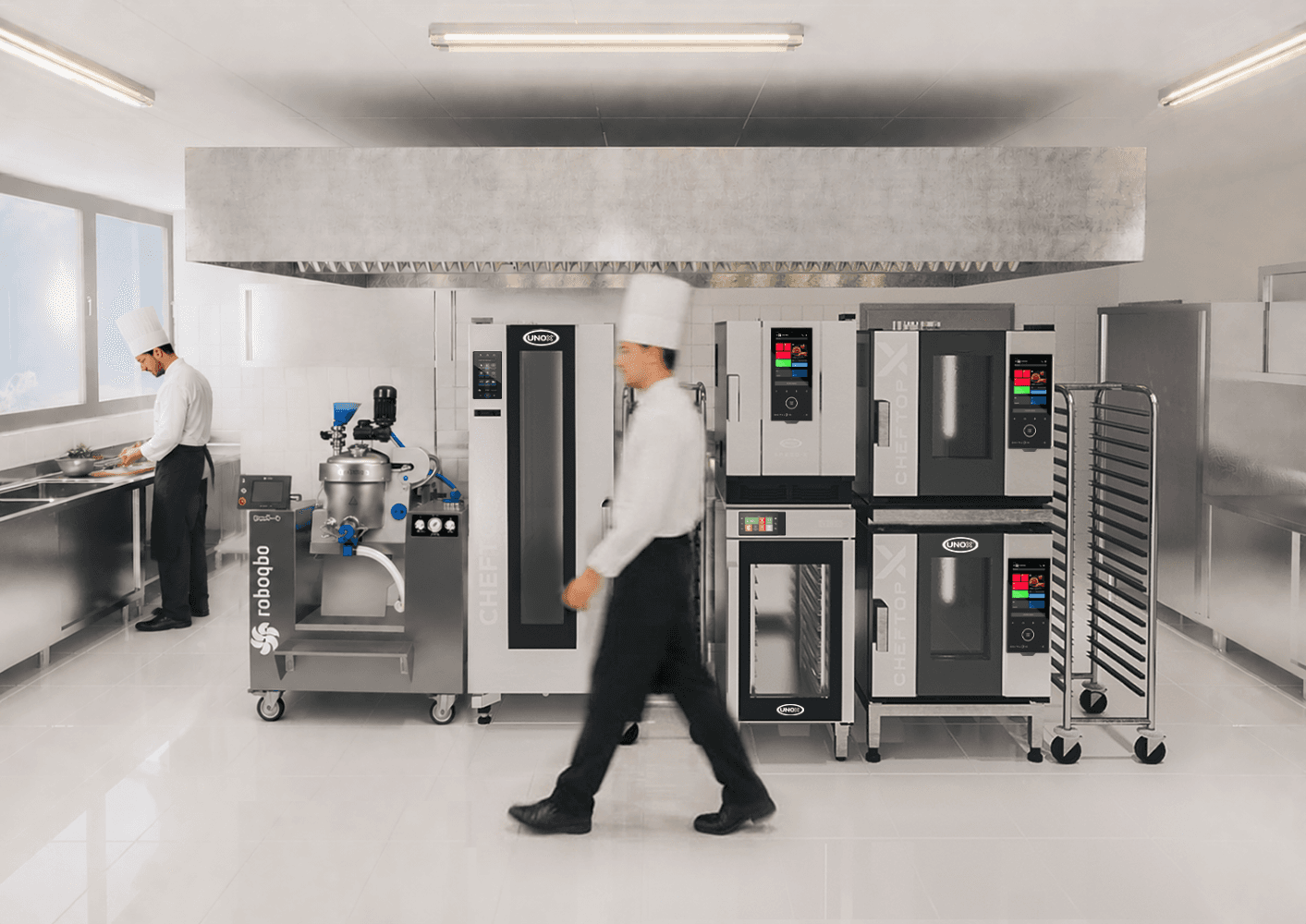
Our Kitchen of the Future concept responds to these needs: a kitchen that integrates Unox and Roboqbo solutions, allowing chefs to focus on what no machine can do for them. Coming up with an idea, imagining a dish and choosing the combination that can make a real difference for the customer, while relying on the very best technology for support.
In the kitchen of the future, every stage of preparation can be entrusted to technology. Consider a lasagne, returning to the example of preparing ragù mentioned a few paragraphs earlier: Qbo can prepare both the ragù and the béchamel, automating processes that would normally require time, multiple tools and constant supervision from staff.
Once assembled, the lasagne is transferred to Unox commercial ovens, which manage the cooking process quickly, precisely and consistently with a single click. Finally, any portions that are not served immediately can be hot held for days with EVEREO®, maintaining their quality and texture until service.
From preparation and cooking to hot holding, every stage becomes easier to manage, while staff can focus on the tasks that truly require experience, creativity and attention.
This kitchen is closer than you think. Contact us via chat to learn more or book an Individual Cooking Experience: you will be able to test Unox and Roboqbo technologies free of charge directly in your kitchen or production facility and discover how they can improve your work every day.